

7 Consulting Frameworks and Principles I use with Allied Health Providers
Seven frameworks I actually use with providers, and why I avoid cookie cutter models. Simple tools for clarity and better decisions in a fast changing sector.

Contents
Honestly, I don’t really love frameworks.
I am not a fan of “cookie cutter” coaching models or anything that tries to fit every business into the same four-step method. It often feels sales driven, overly generic and not aligned with the person-centeredness of Allied Health.
But there are principles I apply every day, and there are frameworks that become genuinely useful when applied in the right context. Some of these models are a bit corporate-y or big picture. However the underlying reasoning can help clarify thinking, reduce overwhelm or bring structure to a messy decision.
I use these tools lightly and adapt them to the situation in front of me. No rigidity, no templates, just practical support for Allied Health providers navigating a complex and fast-changing environment. I thought this collection might be useful for you to think about and consider.
Planning and Growth Frameworks
These help providers set direction, prioritise sensibly and avoid trying to fix everything at once.
1. Three Horizons of Growth
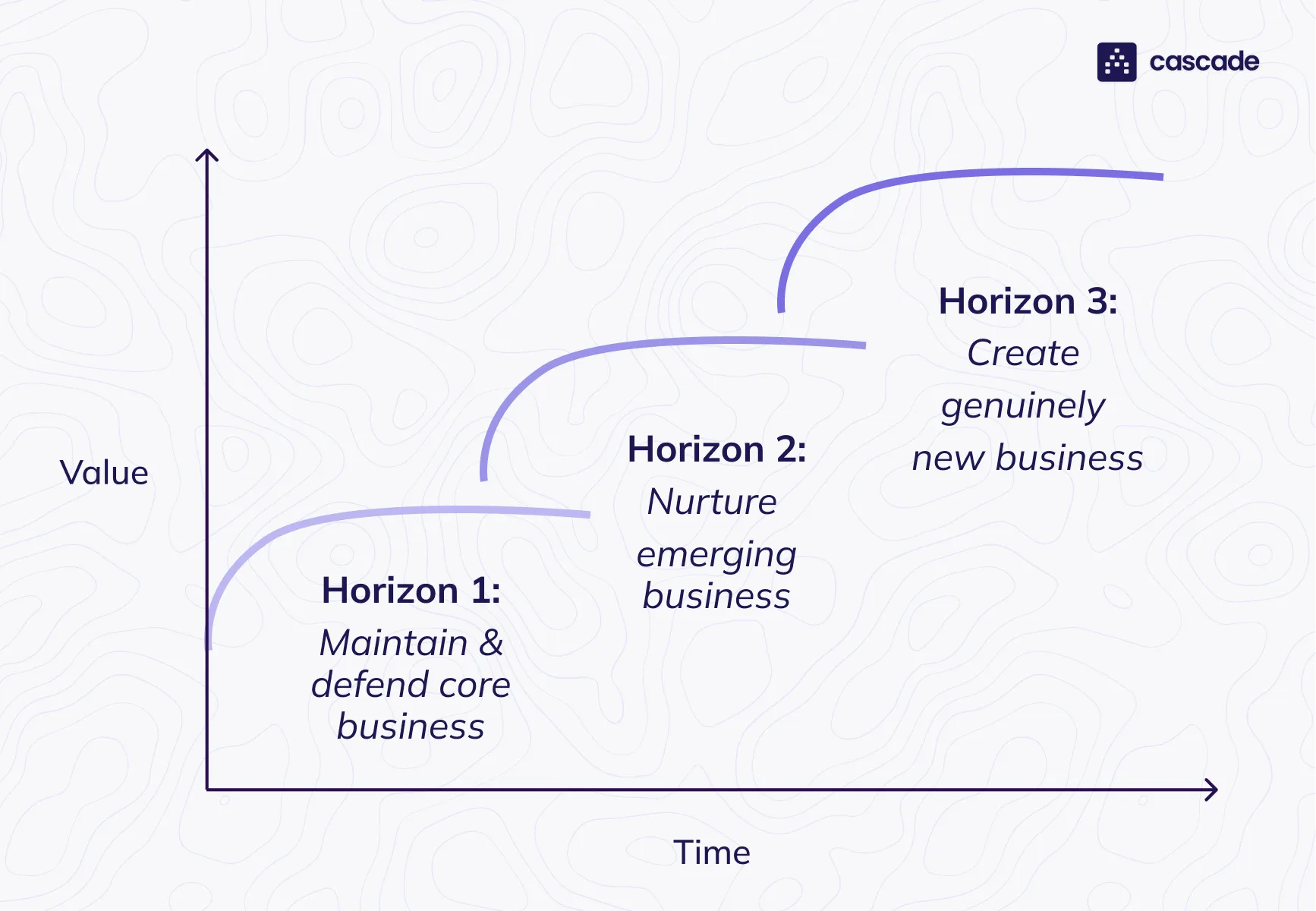
The Three Horizons model is one of the simplest ways to organise planning. Rather than thinking in abstract innovation categories, I translate the horizons into timeframes that feel practical in an Allied Health environment.
For most providers, a useful way to frame the horizons is:
- This financial year
- Next financial year
- Beyond that (the longer-term view)
The same idea works if you prefer to plan by calendar year. It is simply about sequencing priorities. It can be hard to think much further ahead than this when the sector is dealing with ongoing reforms, pricing changes and structural uncertainty.
The model helps separate foundational work from growth initiatives and future opportunities. Most importantly, it stops every idea competing for immediate attention.
2. Effort vs Impact Matrix
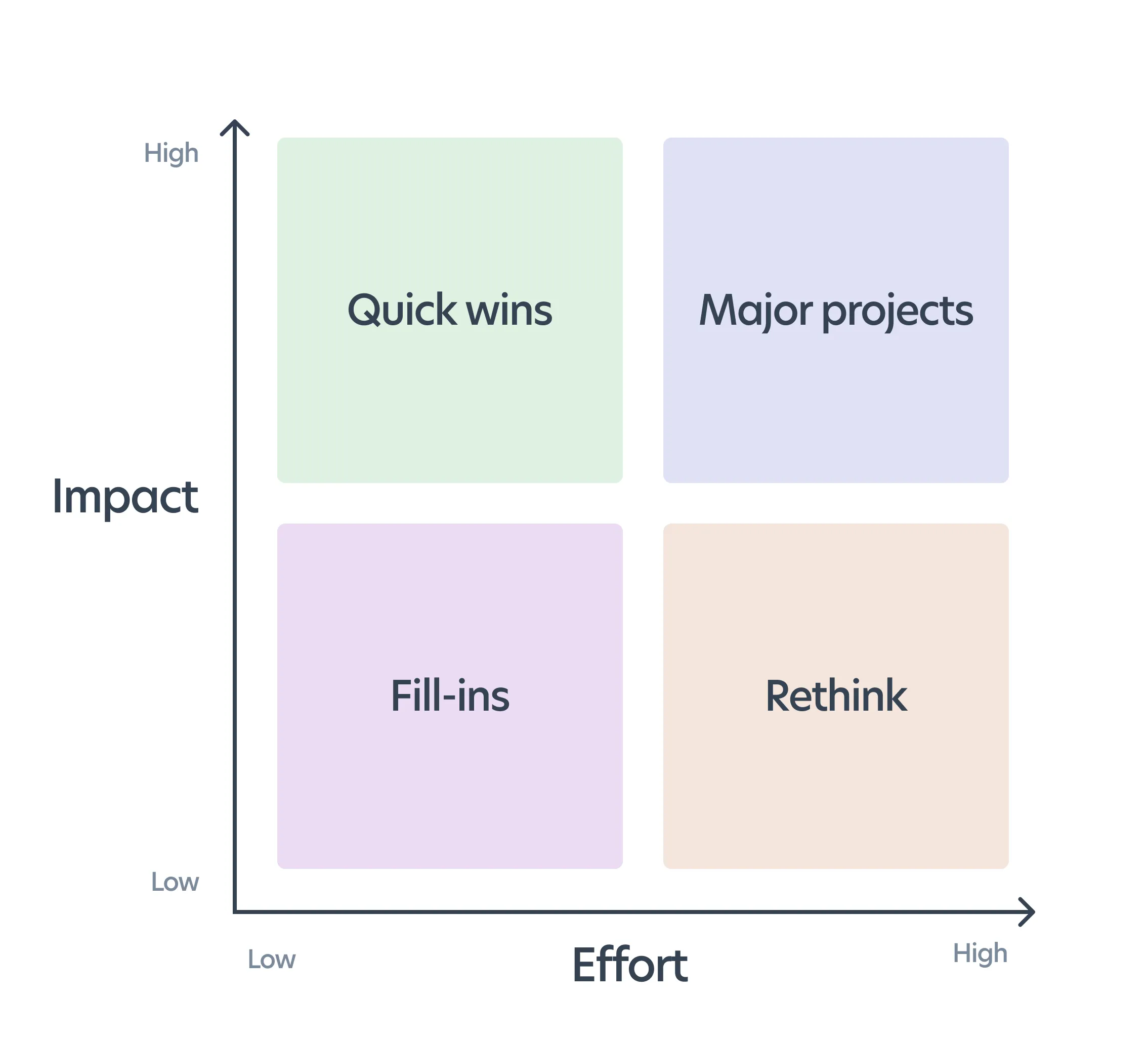
The Effort vs Impact Matrix is especially useful when a provider has a long list of ideas or improvements but is unsure what to prioritise. It helps cut through the noise and make sense of competing projects.
By mapping tasks based on how much effort they require and how much impact they create, it becomes clearer which actions are simple but valuable, which are transformational but heavy, and which are likely distractions. This shift alone often reduces overwhelm.
It is a practical way to decide what needs attention now, what can wait and what probably does not need to be done at all. It is a small framework that consistently adds clarity when everything feels important.
3. Ansoff Matrix
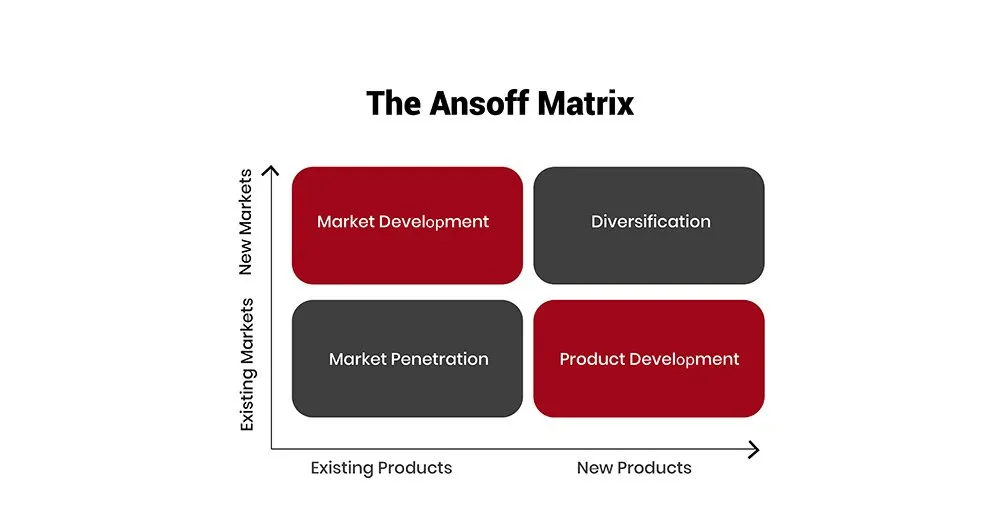
Note: I have adapted the original framework to use “services” rather than “products” as it is more relevant to Allied Health.
The Ansoff Matrix is a simple way to think about growth options. It maps two dimensions, whether you are offering existing or new services and whether you are targeting existing or new markets, into four strategic quadrants.
For Allied Health providers, this is especially useful when considering diversification. Using a typical NDIS provider as an example:
- Market penetration: Growing caseloads within your current NDIS segments by improving referral conversion, increasing plan utilisation or strengthening retention. Same services, same market, lowest risk.
- Service development: Adding a new discipline like psychology or dietetics, introducing group programs or launching assistive technology assessments. You are still serving the same NDIS market but expanding what you offer.
- Market development: Taking your existing Allied Health services into a new market such as aged care, DVA or government contracts. The clinical capability already exists. The shift is in the buyer, the funding mechanism and the referral pathway.
- Diversification: Adding a new discipline and entering a new sector at the same time. For example, launching physiotherapy services into aged care when your current business only delivers OT within NDIS. Two unknowns compounding at once carries the most risk.
The matrix helps providers recognise where a growth idea actually sits. What feels like a small step can involve two big shifts at once. Equally, what feels ambitious might only involve one new variable. That clarity is often enough to change the sequencing or scope of a decision.
Strategy and Service Design Frameworks
These help clarify what you offer, who benefits from it and why it matters in a crowded market.
4. Business Model Canvas
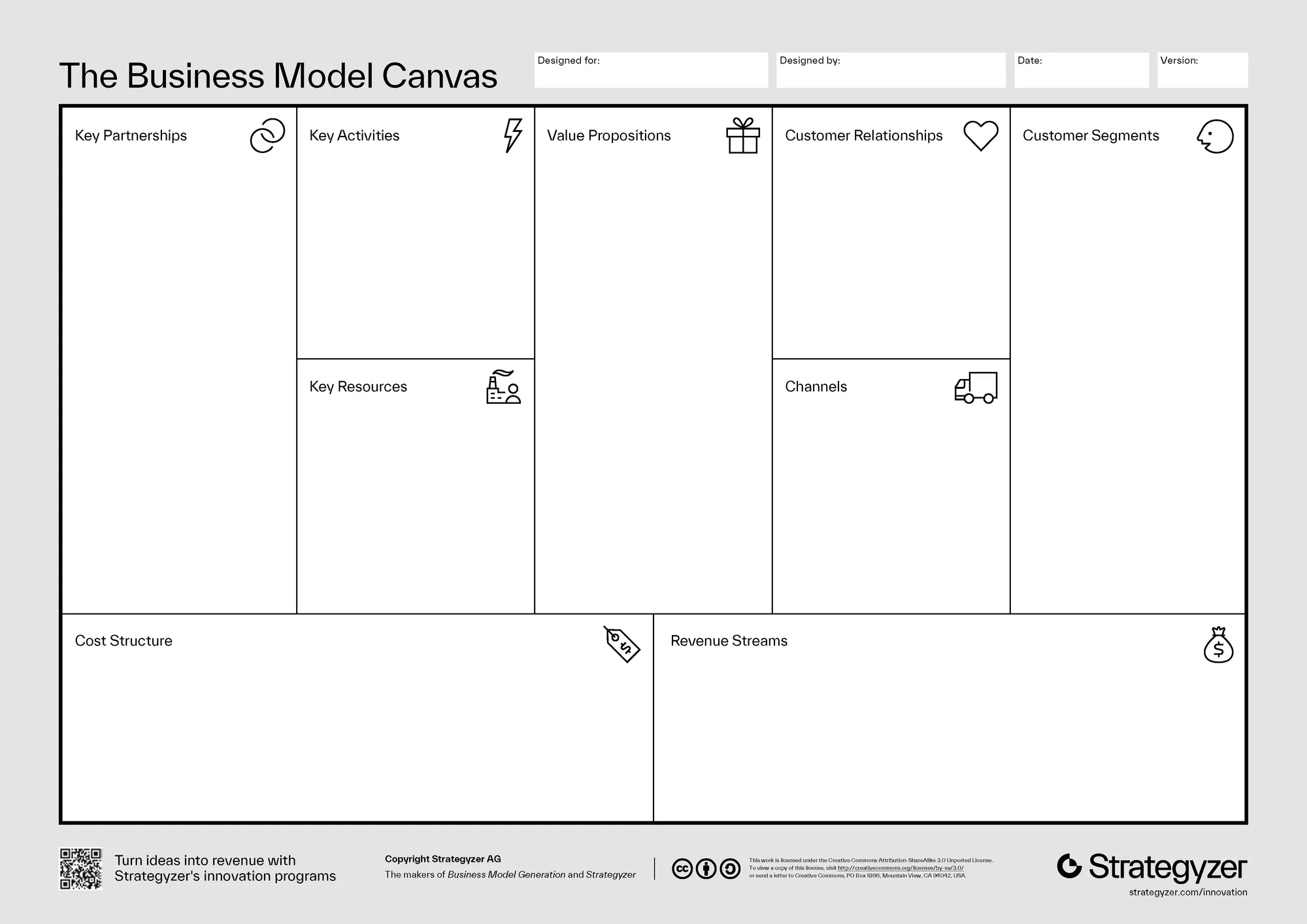
The Business Model Canvas is simply a clean, structured way to map your entire business model on one page. In Allied Health, this is incredibly useful because most providers do not have a clear, written outline of what their business actually is or how all the pieces fit together. This framework gives you a straightforward way to capture that.
It is also a helpful tool when you are considering adding a new service or discipline, shifting your delivery model or planning for something like Support at Home. Seeing everything laid out across customer segments, value propositions, key activities, partners, costs and revenue makes gaps and mismatches easier to spot.
It is one of the simplest ways to get aligned on how the business works today and how a potential new model might work in the future.
5. Value Proposition Canvas
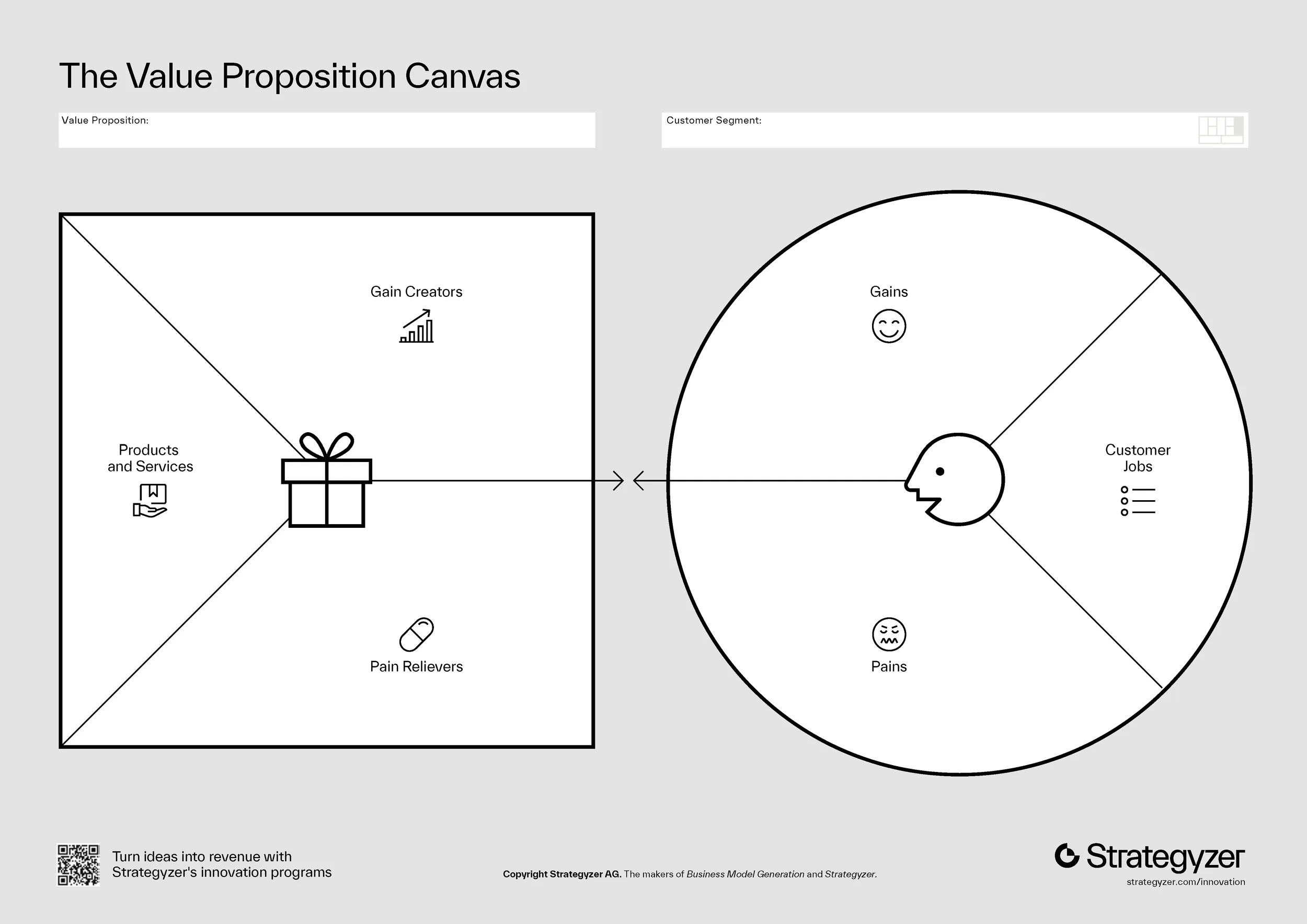
The Value Proposition Canvas is a practical way to clarify why someone should choose your service over another. In allied health, this is especially helpful because most providers default to broad clinical language that does not resonate with the people who actually make referral decisions.
The framework helps you break down what your clients, coordinators or case managers need, what they are trying to avoid and what they value most. It then guides you to articulate your services in a way that connects directly to those needs, rather than relying on generic statements like “quality therapy”.
It is one of the strongest tools for sharpening your messaging, refining your EVP (employee value proposition) or USP (unique selling point) and improving referral conversion. Clearer value, expressed in the right language, almost always leads to clearer communication and stronger relationships.
Communication and Clarity Frameworks
These help you communicate clearly and present information in a structured way.
6. MECE Principle
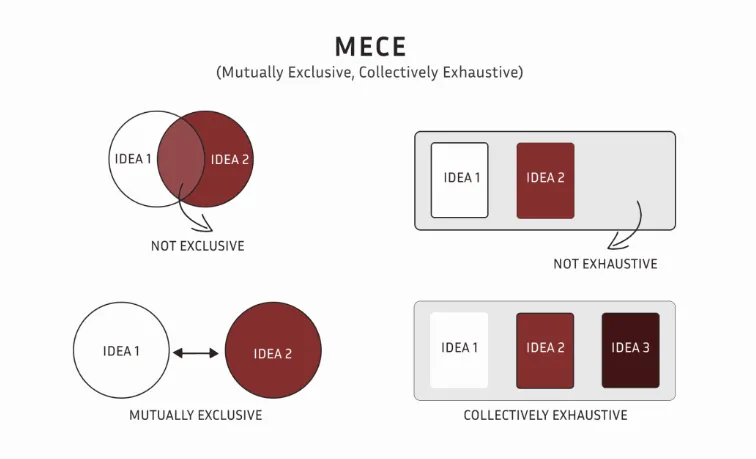
The MECE principle is about organising information so it is mutually exclusive and collectively exhaustive. In practice, it is a simple way to break something complex into clean, non-overlapping categories that cover everything without duplication.
I use MECE whenever I need to simplify messy or detailed information, whether that is in scopes, reports, onboarding documents or summaries of reforms and compliance requirements. It helps people absorb information quickly without feeling overloaded.
This article is actually structured using MECE categories. It is a small example of how useful the principle can be for creating clarity and improving the way information is presented.
7. Pyramid Principle
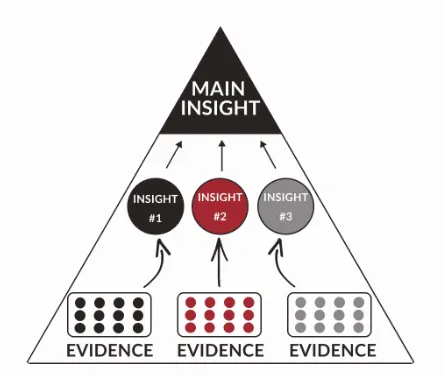
The Pyramid Principle encourages you to lead with the conclusion first, then follow with supporting detail. It is one of the most effective ways to communicate clearly, especially when you are speaking to busy people who do not have the time or bandwidth to sift through background information before getting to the point.
I try to communicate this way in client calls (although I often have to remind myself to do it). I also use this principle when structuring slide decks, presentations and written summaries so that the main insight or recommendation is front and centre, with the reasoning laid out underneath.
It is a simple technique, but it makes decision-making easier and helps ensure your message is understood quickly and accurately.
Summary
These frameworks are not about adding more complexity. They are simply tools that can help bring structure to decision-making, prioritise what matters and create a bit more clarity in an environment that is constantly shifting. When applied lightly and adapted to the realities of Allied Health, they can make it easier to plan, communicate and move your business forward with confidence.
If you are looking to apply any of these ideas within your own service, or you want help working through your next steps, I am always happy to chat: