

One Year of Conway Consulting Group: The Numbers, the Lessons and the Honest Reflection
Year one of Conway Consulting Group, with the numbers behind it. What worked, what did not and what I got wrong about content in Allied Health.

Contents
A year ago I launched Conway Consulting Group with no clients, no content and no idea whether anyone in Allied Health actually wanted what I was offering.
Today I’m sitting on the other side of that with 76 clients served, 383,000+ LinkedIn impressions and more conversations about this sector than I could have imagined. I wanted to mark the anniversary by doing what I’ve tried to do all year: share honestly, back it up with data and reflect on what actually happened rather than what I planned.
Earlier this week I posted a reflection video where I talked through the personal side of this year: why I do this, how I’ve changed, what I miss. If you haven’t watched it, I’d encourage you to. It’s the most personal and unscripted I’ve been in a public forum.
This blog is the companion piece. More structured, more data-driven and designed to be the thing you can bookmark if you’re interested in what a year of solo consulting in Allied Health actually looks like.
The Early Days: February to April 2025
I launched on 28 February 2025 with a LinkedIn post announcing Conway Consulting Group. That post did 5,298 impressions, which felt enormous at the time. For context, I was someone who’d been stressed about writing a single LinkedIn post. The idea of putting myself out there publicly was genuinely uncomfortable.
Those first two months were about finding my feet. I posted frequently, putting out more than 30 posts before the end of April. The topics were broad: tech stacks, referral vs recruitment strategy, NDIS diversification. The content was useful but generic. I hadn’t found my voice yet.
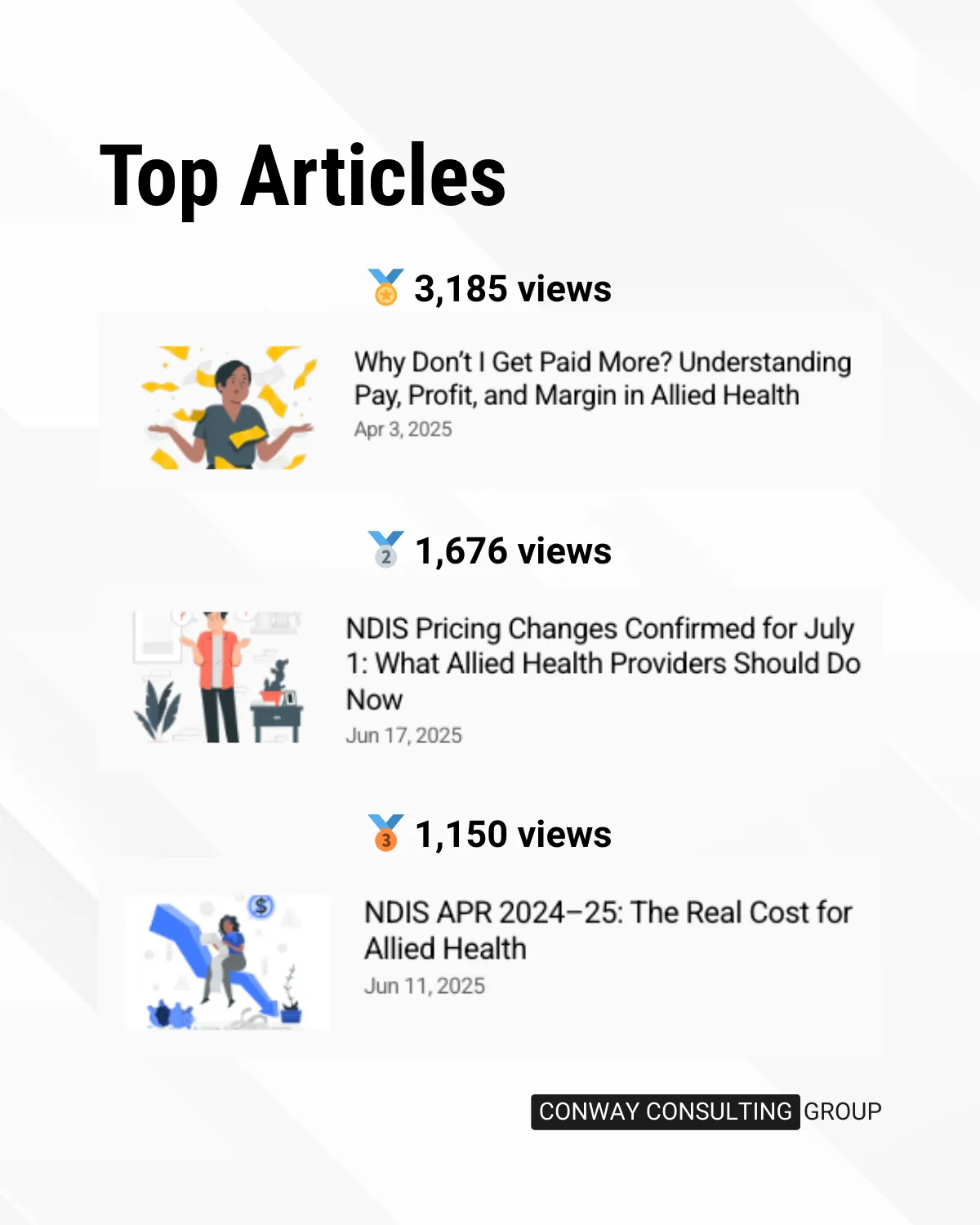
Then in early April, I published “Why Don’t I Get Paid More? Understanding Pay, Profit and Margin in Allied Health.” That article generated 3,185 views and became my most-read piece of the entire year. More importantly, it spread beyond LinkedIn into Facebook groups where frontline clinicians were sharing it. The lesson was immediate: the sector wants to talk about money. When I broke down exactly how billing rates, award wages, overheads and margins interact, with specific numbers. It resonated in a way that general business advice never had.
That article set the direction for the rest of the year. Specific numbers. Concrete analysis. Say something useful, show the working.
The other thing I launched in those early months was a series of networking events called Connect and Refer (here’s what they looked like if you’re curious). I ran sessions across Sydney, Melbourne and Brisbane, bringing Allied Health providers together online to share capacity, exchange referrals and build cross-discipline connections. The Sydney session alone brought together 15 different Allied Health businesses. Some of the connections and referral networks that formed in those rooms are still active today.
I’ll be honest: I hate organising events. I’m the person who dreads planning a birthday party. But I could see a gap. Allied Health works in silos. Businesses compete for the same candidates and referrals. Disciplines stick with their own. There’s very little multidisciplinary collaboration. The events were a means to fill that gap, and in the early days I had the time to run them. As client work picked up through mid-year, I stopped. I simply couldn’t justify the time anymore.
What I didn’t expect was the SEO impact. Because virtually nobody runs Allied Health networking events, the event pages ranked on Google for months after the sessions had finished. That told me something important about unmet demand, which I’ll come back to.
The Reform Wave: May to September 2025
If the early months were about finding my voice, the middle of the year was about using it at full volume.
The NDIS Annual Pricing Review dropped in June. The PAPL followed shortly after. Physiotherapy rates were cut. Travel billing was halved. Loadings disappeared. The Aged Care Act was delayed. Thriving Kids was announced. I-CAN started taking shape. It was the most significant period of reform across Allied Health in recent memory (ever?), and it all hit within a few months.
This is where my content found its natural home. I was already speaking to dozens of providers every week through consulting. I could see the anxiety, the confusion and the real operational impact of these changes on the ground. So I wrote about it. Quickly, specifically and with as much practical analysis as I could pack into a LinkedIn post and/or article.
The numbers from this period tell the story. Between July and September 2025, I published 34 posts that generated 147,522 impressions. That’s roughly 38% of my total annual impressions from just 22% of my posts. My highest-performing post of the entire year came from this window: “How much juice can you squeeze from the NDIS lemon?” hit 23,609 impressions with a simple visual showing the real time cost of a single Allied Health appointment. Posts about Therapy Assistant travel rates (18,296 impressions), the APR itself (14,406 impressions) and the PAPL confirmation (10,400 impressions, 326 engagements) all followed. Every one of my top three articles and top three posts by engagement related directly to pricing reform.
Two patterns emerged clearly. First, speed matters. Being among the first to publish plain-language analysis of a policy change earned disproportionate reach. When the APR or PAPL dropped, I would have a post or article live within hours. People were looking for someone to explain what had just happened and what it meant for their business. Second, specific numbers consistently outperformed general commentary. A post showing “$193.99 down to $183.99, here’s what that means for a clinician billing 25 hours a week” would get five to ten times the reach of a post saying “rates have been cut.”
The sector wanted to talk about reform and money. I gave them somewhere to do it.
The Quieter Build: October to December 2025
After the intensity of mid-year, the second half of 2025 looked different. I posted less and average impressions dropped to around 2,500. Client work picked up substantially, and word of mouth became the primary growth engine. I was spending more time consulting and less time creating content, which is exactly how a consulting business should work. The trade-off felt right.
The content I did publish was more intentional. I started contributing to industry publications, writing my first article with DSC. I made my podcast debut with Tania Gomez and Paul Bryan on Thriving Kids, then appeared on OT & Yap with Nik Peshwani. I engaged more with other voices in the sector, sharing and adding commentary to work by Sara Gingold, Clare Batkin, Chantelle Robards and others. I also started covering topics I’d deliberately avoided earlier, publishing pieces that challenged the sector to provide actual data supporting its claims about evidence-based practice. These were riskier. They pushed against accepted narrative. But the engagement data suggested people valued someone willing to ask uncomfortable questions, provided those questions were backed by substance.
Where I Am Now: January to February 2026
As I mentioned in the reflection video, I’ve probably grown more in the past year than I can ever remember. Going from managing hundreds of staff to being solo is a significant gear shift. Having the time and space to reflect, and then helping other people reflect on their own leadership, forced me to examine assumptions I’d carried for years. I also grew a beard and now a moustache, which may or may not reflect a deeper personal transformation.
Content doesn’t scare me anymore. A year ago, a single LinkedIn post caused genuine anxiety. This week I sat in front of a camera and recorded a solo video monologue. I’ve been on multiple podcasts now, most recently with Liam Fagan where the only agenda was sport and Allied Health. I’ve published articles that I knew would generate pushback. The discomfort hasn’t disappeared, but I’ve built a tolerance for it and learned that saying something useful is worth the occasional angry comment.
My network has become my most valuable asset. When I was a director at a large Allied Health company, most other providers were competitors. We were going for the same candidates, the same referrals. Now, as an independent consultant, I can talk to anyone. I’ve met hundreds of clinicians, business owners, support coordinators, recruiters and sector-adjacent people this year, and those connections have shaped how I think about the sector as much as any data set.
I miss having a team more than I expected. Going from hundreds of staff to just me is lonely at times. I miss the chinwag with a business partner, the casual conversations. I especially miss talking to everyday clinicians and new grads, and it’s something I want to do more of in year two.
Year One by the Numbers
I shared these stats as a carousel on LinkedIn earlier this week. Here’s the full breakdown with some brief commentary.
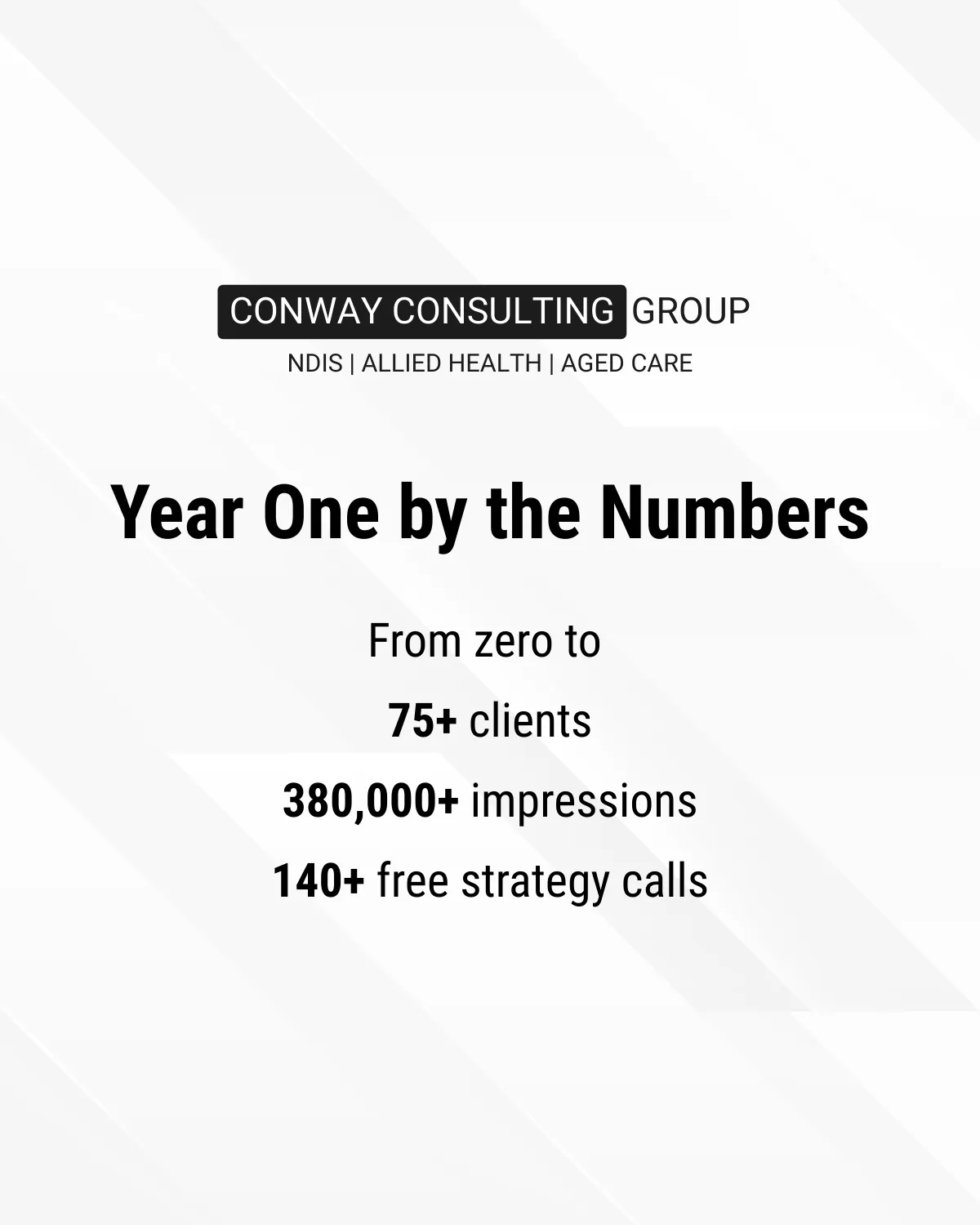
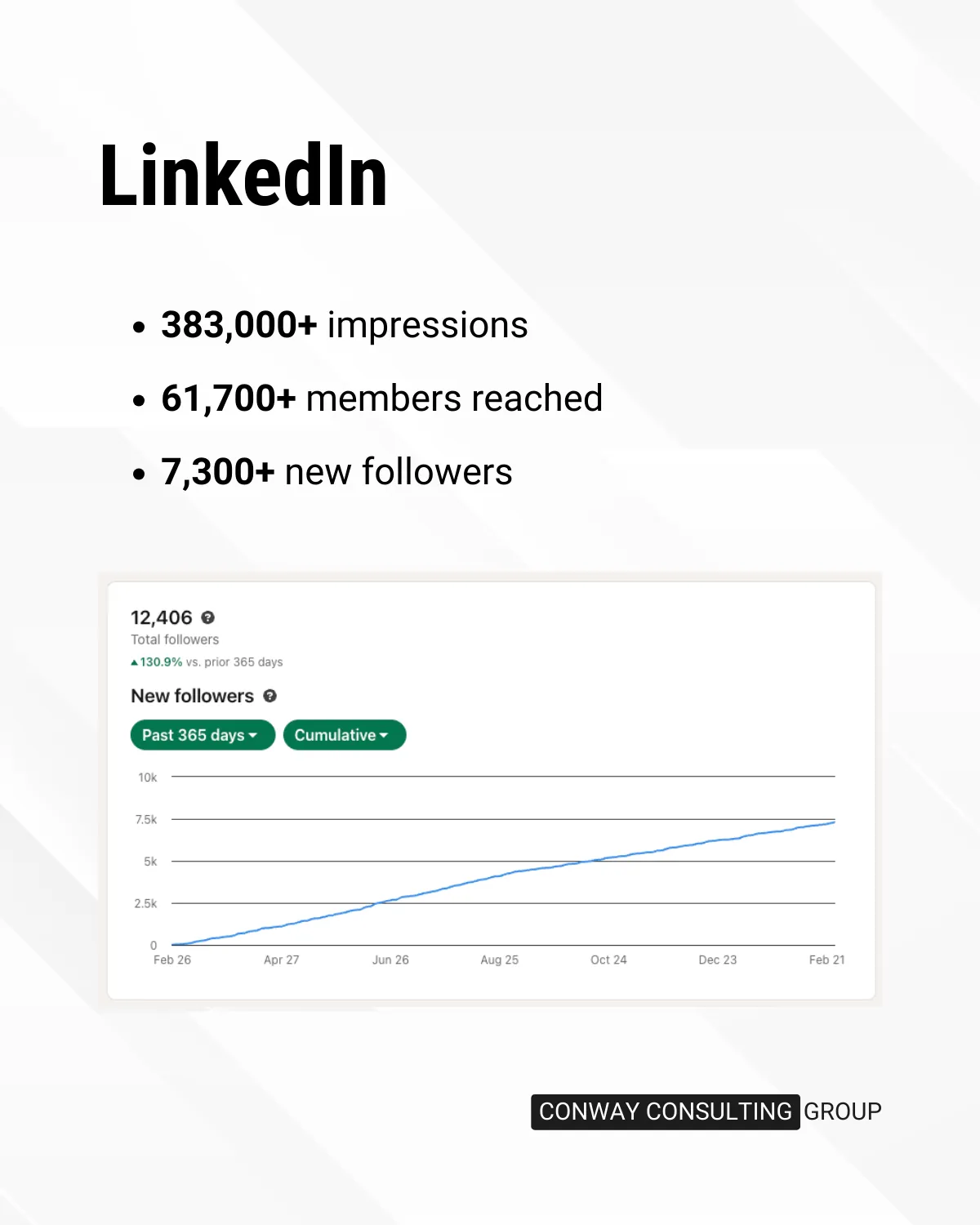
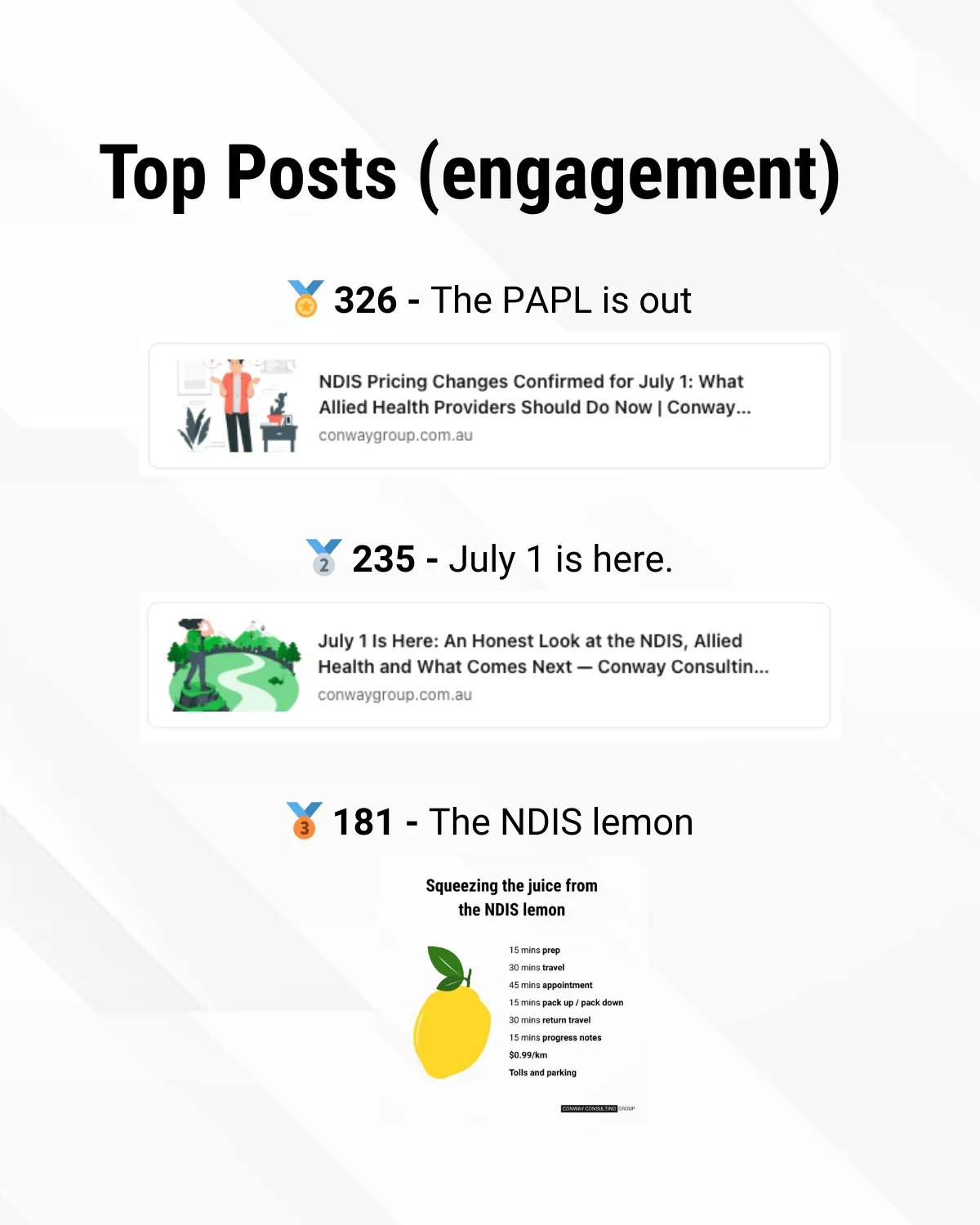
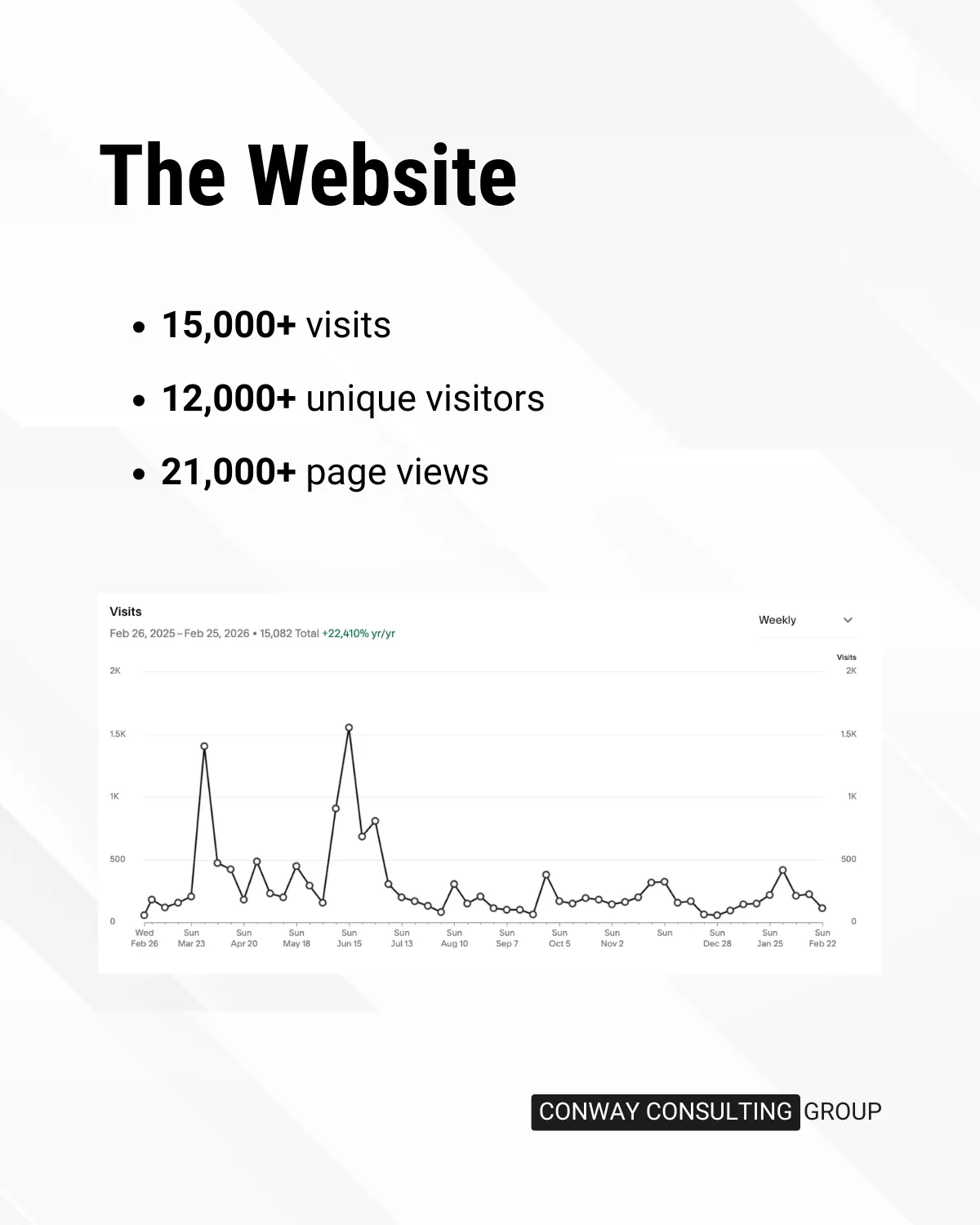
LinkedIn: 12,400 followers (more than doubling the account in year one), 383,222 impressions, 61,746 unique members reached and 6,278 total engagements.
Website: 15,072 visits from 12,000+ unique visitors. The traffic graph shows two clear spikes: “Why Don’t I Get Paid More?” taking off in late March and then the NDIS reform coverage in mid-June. After July, traffic settled into a steady baseline.
Traffic sources: Direct traffic led at 42%, which tells me people are bookmarking or sharing links through private channels where referral data gets stripped. LinkedIn drove 28%. Google at 12% is encouraging for a year-old site, and a chunk of that came from the networking event pages ranking for months. Facebook at 11% was the genuine surprise: I don’t go on Facebook (I am not a fan of some of the groups and the anonymous posting/commenting), so this traffic came entirely from clinicians sharing my articles in professional groups. It tells me that when I write about topics that affect individual clinicians (pay, career, financial literacy) rather than business owners (strategy, operations, growth), the audience expands well beyond LinkedIn.
Newsletter: 491 active subscribers, grown through a mix of lead magnets, website sign-ups and manually adding people I’ve connected with through strategy calls and meetings.
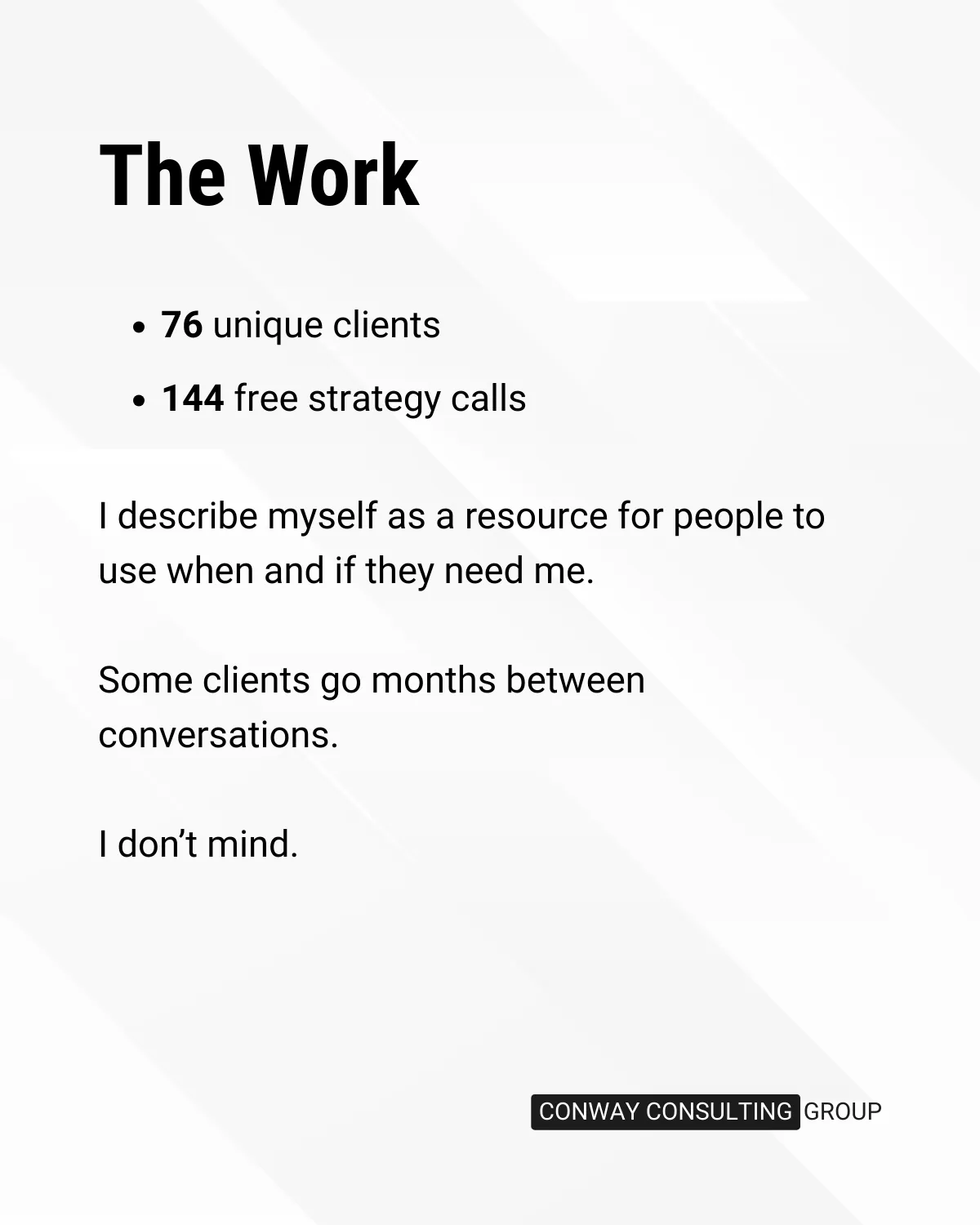
Business: 76 unique clients and 144 free strategy calls. I describe myself as a resource for people to use when and if they need me. No lock-ins, no minimum commitments. Some clients go months between conversations. I don’t mind. Many of those strategy calls converted into paid work, and the rest got value from the conversation itself. The goodwill and referrals that come from being generous with time have been one of the biggest drivers of growth. The business is financially sustainable and I’m comfortable with where things sit heading into year two.
What I Learned About Content in Allied Health
Looking back across 153 LinkedIn posts, a few patterns are worth naming.
The sector wants to talk about money and reform above all else. Seven of my ten highest-performing posts directly addressed pricing, rates, revenue or financial sustainability. The remaining three covered major structural reform. General business advice, tech tips and operational content all performed below average. This doesn’t mean those topics aren’t valuable (they serve a different purpose in the consulting pipeline) but the raw audience interest is overwhelmingly concentrated in two areas: how much things cost and what’s changing in the system.
Being first with useful analysis earns compounding returns. When a major policy document dropped, I would typically publish within hours. The sector is full of peak bodies and advocacy organisations that publish position statements days or weeks later. There was a clear gap for someone providing rapid, practical analysis from a provider’s perspective.
Visual simplicity breaks through. My single highest-performing post was the lemon infographic. Something people could understand in five seconds outperformed lengthy written analysis every time. In a feed full of long text posts, a shareable visual with a clear point cuts through in a way that words alone often can’t.
The sector is craving connection. This was the lesson from the networking events, and it kept showing up throughout the year. Allied health operates in silos. Businesses view each other as competitors. Disciplines stick with their own. Add the rise of AI and social media into the mix, and clinicians are becoming increasingly isolated, even from each other. The Connect and Refer events tapped into something real. Nobody else was running Allied Health networking events, so the event pages ranked on Google for months. The fact that this gap exists in a sector built on multidisciplinary care says something worth paying attention to.
Some things didn’t land on LinkedIn. I ran a CRM content series three times across the year and it averaged around 600 impressions each time. Event promotional posts rarely cracked 300. Operational content and event promotion simply don’t generate organic reach the way policy and financial analysis do. That’s useful to know for planning, even if the underlying work is still worth doing.
My voice evolved, and that evolution was visible to others. Early posts were more formal, more cautious. By mid-year I was writing with clearer opinions and sharper analysis. By year’s end I was comfortable recording video, appearing on podcasts and writing pieces I knew would generate pushback. Several people have told me they’ve noticed the progression too.
Thank You and What’s Next
To every person who read an article, engaged with a post, jumped on a call, referred someone my way or trusted me with their business: thank you. Genuinely.
I started this year as someone who wasn’t sure if anyone needed what I was offering. I’m finishing it knowing that the sector is full of incredible people doing hard work in a complicated system, and that having someone in the middle who can see across dozens of providers, speak plainly about what’s working and what isn’t and back it up with data has value.
Year two will be more of the same, with a few additions. I want to do more work with students and early-career clinicians. I want to keep contributing to the policy conversation. I’m launching a new live show with Chris Antartis called Allied Health: Live & Unscripted, where we’ll unpack what’s actually happening across the sector in real time. You’ll also see a lot more of me across webinars, podcasts and networking events.
I still don’t have a five-year plan, and I’ve made my peace with that. What I do know is that I want to keep helping people navigate through what will be another big year of reform.
Looking forward to year two.